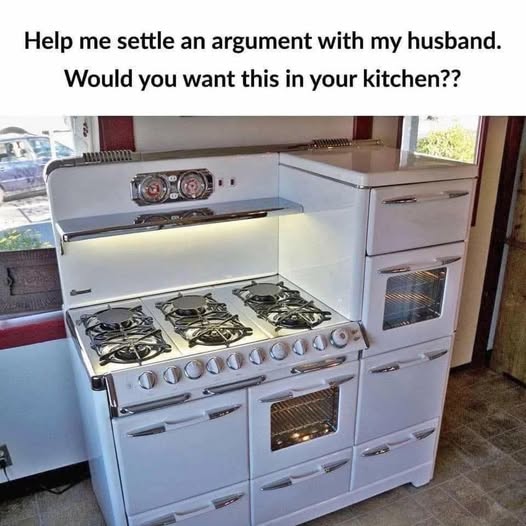
Few things capture the imagination of design enthusiasts quite like a beautifully restored mid-century vintage gas stove. With their heavy chrome accents, glossy porcelain finishes, integrated analog clocks, and unique multi-oven footprints, appliances from brands like O’Keefe & Merritt, Wedgewood, and Chambers look more like luxury classic cars than kitchen tools.

In an era dominated by sleek, minimalist stainless steel, the charm of a 1940s or 1950s appliance is undeniable. But as many couples discover when remodeling an old home, deciding whether to keep or install a vintage stove can lead to some pretty heated household debates.
Is a retro range a timeless heirloom that elevates your home’s character, or is it a maintenance nightmare waiting to happen? Let’s break down the real-world pros and cons of cooking on a vintage kitchen stove.
The Pros: Why People Fall in Love with Vintage Ranges
1. Unmatched Style and Character
The most obvious reason to opt for a vintage stove is aesthetics. These appliances were designed during the golden age of American industrial design. They offer a focal point that modern commercial-style ranges simply cannot replicate. Whether finished in classic crisp white, biscuit cream, or a pastel shade, they instantly inject warmth and soul into a kitchen.
2. Built Like Absolute Tanks
Modern appliances are frequently criticized for their built-in obsolescence, often lasting only 7 to 10 years before their electronic control boards fail. Vintage stoves, conversely, were engineered to endure for generations. Constructed from heavy-gauge steel, cast iron, and thick porcelain enamel coating, these machines are mechanical marvels with zero computerized parts to fry.
3. Surprising Luxury Features
We tend to think of old technology as primitive, but high-end stoves from the mid-20th century were incredibly innovative. Many premium models came equipped with:
-
Built-in Griddles: Integrated heavy cast-iron or chrome griddles built directly into the center of the cooktop.
-
“Grillevator” Broilers: Mechanical broilers that could be raised or lowered with a lever to perfectly sear meats.
-
Vanishing Shelves: High-back shelves that could slide down to cover the burners when not in use, creating clean counter space.
The Cons: The Hidden Realities of Going Retro
1. The Maintenance and Parts Headache
While mechanical parts are durable, they aren’t immortal. Finding an original thermostat, a replacement safety valve, or specialized springs for a 70-year-old stove can turn into a massive internet scavenger hunt. Furthermore, finding a local appliance technician who specializes in antique gas calibrations is becoming increasingly difficult.
2. Safety Standards and Constant Pilot Lights
Most vintage gas ranges utilize standing pilot lights. This means small, open flames are constantly burning underneath the cooktop and inside the oven to keep things ready to light.
-
This design consumes a small but continuous amount of natural gas or propane.
-
It generates a constant, subtle warmth, which can be cozy in the winter but less ideal during hot summer months.
-
Antique ranges often lack modern safety features like automatic gas shut-offs if a flame accidentally blows out.
3. Smaller Oven Space
Despite their massive external footprints, the individual oven cavities in vintage ranges are frequently much smaller than standard modern ovens. Many models feature split designs—one small baking oven and one dedicated pastry or warming oven. If you regularly roast massive holiday turkeys or bake cookies using commercial-sized sheet pans, a vintage stove might feel restrictively cramped.
Comparison: Vintage vs. Modern Ranges
| Feature | Vintage Mid-Century Range | Modern Smart Range |
| ** Lifespan** | Can last 50–100+ years with basic mechanical care. | Typically 7–12 years; limited by electronic lifespan. |
| Electronics | None. Completely mechanical valves and switches. | Heavy reliance on digital touchscreens and control boards. |
| Insulation | Often packed with rockwool (can degrade or settle over time). | Highly efficient fiberglass and advanced thermal barriers. |
| Preheat Time | Can take 15–20 minutes to stabilize oven temperatures. | Fast preheating, often with rapid or convection assists. |
How to Get the Retro Look Safely
If you are caught in an argument over whether to go genuinely vintage or strictly modern, there are a couple of excellent compromise solutions available:
Option 1: Buy a Professional Restoration
Never buy a rusty, unvetted vintage stove off a classifieds site and plug it directly into your gas line. If you want an authentic antique, buy from a certified restoration specialist. These professionals completely dismantle the units, re-porcelain the body panels, re-chrome the trim, replace the insulation, and upgrade the internal valves to comply with modern safety codes.
Option 2: Go with a Modern Retro Replica
If you love the look of the 1950s but want modern convection cooking, self-cleaning cycles, digital timers, and a full manufacturer’s warranty, look into modern retro replicas. Brands like Big Chill, Elmira Stove Works, and Northstar build brand-new, highly efficient electric and gas appliances housed inside gorgeous, vintage-molded shells.
The Verdict: Is It Worth It?
If you view cooking as an art form, appreciate historical preservation, and don’t mind learning the quirks of a mechanical machine, owning a vintage stove can be an incredibly rewarding experience. However, if you prefer low-maintenance convenience, fast preheat times, and smart-home connectivity, a modern replica or a standard contemporary range is likely the better choice for your kitchen harmony.
Frequently Asked Questions (FAQs)
Are vintage stoves energy efficient?
Not by modern standards. Because they rely on standing pilot lights that burn gas 24/7 and feature less efficient insulation compared to today’s standards, they will slightly increase your utility footprint. However, many owners argue that keeping an existing appliance out of a landfill offsets its energy inefficiency.
Can you convert a vintage gas stove to electric?
While technically possible through extensive custom fabrication and replacing the burners with electric heating elements, it is incredibly cost-prohibitive and strips away the original mechanical engineering of the appliance. If you need electric cooking, it is highly recommended to purchase a modern retro replica instead.
Is it safe to use a vintage stove in a house with children?
Because vintage stoves are made of solid, heavy metal and lack the cool-to-the-touch external glass or insulation properties of modern appliances, the exterior oven doors and cooktop trim can become very hot to the touch during operation. Extra supervision or safety gates may be necessary with small toddlers around.