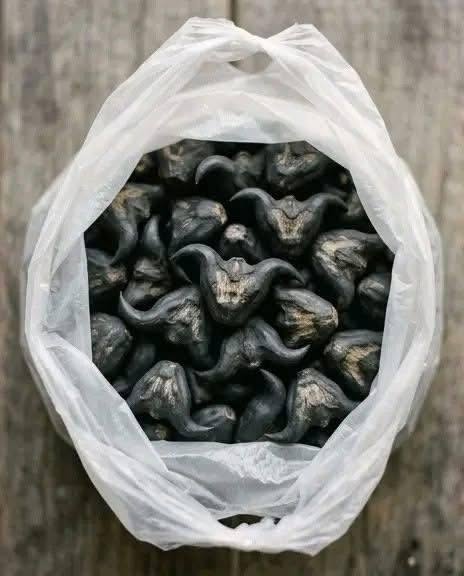
Food has a wonderful way of surprising us, especially when nature packages something delicious in an entirely unexpected exterior. If you have recently opened a gift bag from a neighbor to find a pile of glossy, jet-black pods shaped distinctly like bull horns or flying bats, you are looking at one of the most unique aquatic treats in the culinary world: Water Caltrops (commonly known as Water Chestnuts or Bat Nuts).
Despite their slightly intimidating, structural outer shell, the inside of these pods contains a tender, starchy, and naturally sweet white nut that has been cultivated across Asia and Southern Europe for thousands of years.
If you’ve just inherited a fresh bag, here is everything you need to know about what they are, how they taste, and how to safely prepare them at home.
What Exactly Are Water Caltrops?
The water caltrop (Trapa natans) is the seed pod of a floating aquatic plant that thrives in slow-moving rivers, ponds, and marshes. As the plant’s delicate white flowers bloom and fade beneath the water’s surface, these hard, woody fruits develop underneath the leaves.
Because of their unique geometry, they go by many descriptive names around the world:
-
Bat Nuts or Devil Pods (due to the sweeping, curved horns).
-
Ling Kok (their traditional name in Cantonese cuisine, where they are a staple celebration food during the Autumn Mid-Festival).
-
Water Chestnuts (though they shouldn’t be confused with the round, crunchy Chinese water chestnuts commonly found sliced in canned stir-fries).
When fresh, the outer skin is a deep charcoal black or dark green. Inside this woody armor lies a solid, heart-shaped white kernel that boasts a rich, comforting texture similar to a beautifully roasted potato or a sweet boiled chestnut.
Crucial Safety Rule: Never Eat Them Raw
Before you grab a knife to crack one open, there is an absolute non-negotiable safety rule you must follow: Water caltrops must always be thoroughly cooked before consumption.
Because these pods grow in wild, static fresh water, their outer hulls can naturally harbor waterborne parasites (specifically the giant intestinal fluke, Fasciolopsis buski). Boiling or roasting the pods completely neutralizes any risk, making the inner nut completely safe, healthy, and incredibly nutritious to enjoy.
How to Prepare and Cook Water Caltrops
Cooking bat nuts is an incredibly straightforward process that fills your kitchen with a wonderful, earthy aroma.
Step 1: The Pre-Wash Rinse
Place your caltrops in a colander under cool running water. Use a stiff kitchen brush to gently scrub away any lingering silt, sand, or pond debris hidden within the curves of the horns.
Step 2: The Perfect Boil
-
Place the cleaned pods into a large cooking pot.
-
Cover them completely with water, adding a generous pinch of salt to enhance their natural sweetness.
-
Bring the water to a rolling boil, turn the heat down to medium, and let them simmer undisturbed for 30 to 45 minutes.
-
Tip: You’ll know they are perfectly cooked when the tough outer shell softens slightly and changes to a matte, uniform dark finish.
WATER CALTROP COOKING MATRIX
+-------------------+--------------------+-----------------------------------+
| Method            | Cook Time          | Best Kitchen Use                  |
+-------------------+--------------------+-----------------------------------+
| Traditional Boil  | 35 - 45 Minutes    | Casual snacking, warm salads      |
| Oven Roast        | 25 - 30 Minutes    | Deep, nutty flavor profiles       |
| Savory Stewing    | Added to slow cook | Absorbs rich broths and meat juices|
+-------------------+--------------------+-----------------------------------+
How to Crack the Shell and Eat Them
Once boiled, drain the water and let the caltrops cool down until you can handle them comfortably. Cracking the woody shell requires a little bit of technique:
-
The Knife Method: Lay the pod flat on a sturdy cutting board. Using a heavy chef’s knife, carefully slice the pod directly down the middle, separating the two horns. Once split, you can easily pop the pristine white kernel straight out of its casing with your fingers or a small cocktail fork.
-
The Nutcracker Method: If the shells are particularly stubborn, a standard kitchen nutcracker or a clean pair of pliers applied gently to the center body will split the hull cleanly without crushing the delicate nut inside.
The Bottom Line
While they might look like a gothic curiosity at first, water caltrops are a wonderful, comforting reminder of how rewarding it can be to try new foods. Toss the cooked kernels into a cozy autumn stir-fry, dice them into a warm grain bowl, or simply enjoy them warm with a tiny sprinkle of sea salt alongside a hot cup of tea.