
When clearing out multi-generational family homes, old barns, or estate properties, it is incredibly common to run into heavy, unidentifiable hand tools. Before mass production took over the manufacturing world, specialized trades required tools forged with absolute durability in mind.
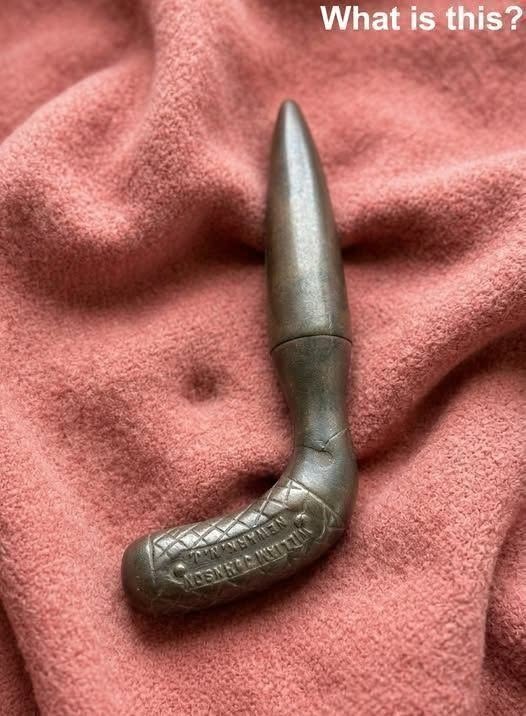
If you have discovered a heavy, distinctively curved tool with a thick handle and a tapered iron point stamped with the name “William Johnson – Newark, N.J.”, you have found a classic Antique Garden Dibble (also widely known as a Dibber).
Far from being a generic piece of hardware, this tool dates back to an era when American tool forging was centered in industrial hubs like Newark. Let’s break down the history of this unique find, what it was used for, and its value to modern antique collectors.
The History: Who Was William Johnson?
To understand the tool, it helps to look at the stamp on its side. William Johnson established his tool manufacturing company in Newark, New Jersey, in 1830. Throughout the 19th and early 20th centuries, Newark was a powerhouse for high-quality American tool fabrication, renowned for supplying reliable hand tools to carpenters, masons, leatherworkers, and gardeners alike.
The William Johnson Tool Company operated independently for over a century until 1938, when it was purchased by the C.S. Osborne & Co. company (another legendary Newark toolmaker that continues to produce specialty items today). Because your tool features the classic independent William Johnson mark, it is a genuine historic antique, likely produced anywhere from the late 1800s to the early 1900s.
The Design and Function: What Was It Used For?
A garden dibble is a wonderfully simple yet indispensable planting tool. Its primary engineering purpose is to poke uniform, perfectly sized holes in the soil for planting seeds, bulbs, or small seedlings.
The tool stands out from modern plastic variants due to its deliberate construction details:
-
The Weighted Cast-Iron Tip: Unlike trying to scoop out a hole with a hand trowel—which disrupts the surrounding soil structure—the smooth, heavy iron cone effortlessly pierces through tough, compacted clay or damp spring earth using the natural weight of the tool.
-
The Contoured Handle: Whether crafted from solid cast iron as a single piece or fitted with a curved wooden top, the handle is shaped like a “T” or a gentle hook. This allowed the gardener to apply firm, comfortable downward palm pressure without straining their wrist over long hours in the garden beds.
-
Soil Compaction Action: As the pointed cone plunges downward, it gently compresses the walls of the hole. This prevents loose soil from immediately collapsing back inward, creating a clean, open pocket where a flower bulb or vegetable seed can drop straight to the bottom at an exact, consistent depth.
VINTAGE TOOL IDENTIFICATION MATRIX
+-------------------+-----------------------------------+
| Feature           | Description & Purpose             |
+-------------------+-----------------------------------+
| Maker's Mark      | Stamped "William Johnson Newark NJ"|
| Materials         | Heavy forged cast iron (some with wood)|
| Total Length      | Typically 9 to 11 inches long     |
| Main Utility      | Punching precise seed & bulb holes|
+-------------------+-----------------------------------+
What Should You Do With It?
If you are sorting through an estate, do not throw this away! Old iron tools made by historic Newark firms are highly collectible.
• For Practical Use
Because it was built using heavy-duty cast iron, this tool is practically indestructible. Many vintage enthusiasts prefer cleaning them up and putting them right back to work in modern garden plots. A light scrubbing with fine steel wool and a coat of mineral oil will remove superficial surface rust and protect the iron for another hundred years.
• For Antique Value
Depending on the overall condition, the legibility of the maker’s stamp, and whether it features an all-iron or a mixed wood handle, these original William Johnson dibbles generally sell among antique tool collectors for anywhere between $25 to $50. They also make highly attractive rustic display pieces for farmhouse decor or potting sheds.
The Bottom Line
Finding a signed William Johnson piece is a wonderful connection to early American industrial history. It reminds us that long before automated machinery took over agriculture, the simple act of putting a seed in the ground relied on heavy, beautifully balanced hand tools built to outlast generations.