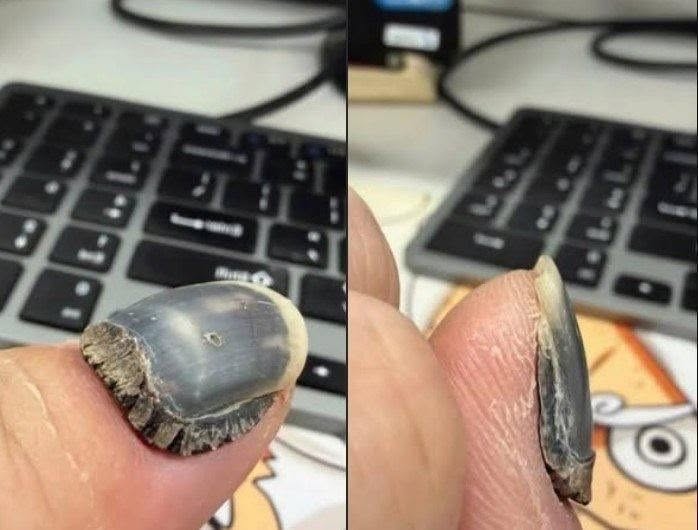
Have you recently scrolled through your social media feed and stumbled across a horrifying image that looked like a severely decaying, bruised, or detached fingernail? If the caption read something along the lines of “These are the consequences of using too much nail polish/acrylics,” you aren’t alone.
Millions of internet users have been tricked by this exact image. However, what looks like a medical nightmare at first glance is actually a fascinating piece of natural history.
This viral photo does not showcase a damaged finger; instead, it features a fossilized shark tooth perfectly positioned against a human fingertip to create a mind-bending optical illusion.
The Anatomy of the Viral Shark Tooth Meme
When you look closely at the image, the trick relies entirely on forced perspective and natural mimicry. The smooth, dark, glossy surface of the fossil perfectly imitates a severely bruised or diseased nail plate, while the lighter, calcified root of the tooth looks exactly like a ragged, peeling cuticle bed.
The dark coloration of the tooth is a result of permineralization. Over millions of years, as a shark tooth sits buried in ocean sediment, water rich in minerals like iron, phosphate, and silica seeps into the porous structure. These minerals replace the original organic tissue, transforming the white tooth into a dark grey, black, or deep blue fossil. It is this unique geological process that gives the fossil the precise coloration of a severe subungual hematoma (blood under the nail).
Why Do People Fall for Clickbait Health Scares?
The image frequently circulates with sensationalized warnings about the dangers of cosmetics, acrylic nails, or poor hygiene. This type of content thrives online because it taps into a specific psychological trigger: shock value.
Internet algorithms heavily favor high-engagement posts. When a user sees an image that provokes disgust or fear, they are far more likely to stop scrolling, comment, and share it with friends to ask if it is real. This cycle drives immense traffic to gossip blogs, social media pages, and forums, even though the premise of the post is completely fabricated.
Real-World Nail Health vs. Internet Myths
While the viral photo is entirely fake, it does raise awareness about actual nail health. Heavy use of acrylics, gel manicures, and harsh chemical removers can weaken nails over time, leading to peeling, brittleness, or fungal infections. However, actual medical conditions look very different from a fossilized shark tooth.
If you are looking to invest in genuine nail care, doctors and dermatologists recommend focusing on professional treatments and high-quality products. For those experiencing real nail damage or looking to improve their aesthetic, exploring options like specialized dermatological consultations or affordable health insurance plans can ensure you get the right care without breaking the bank.
Here is a quick look at how real nail issues compare to the viral illusion:
| Condition | Visual Characteristics | Common Causes |
| Subungual Hematoma | Purple, black, or dark brown spot under the nail. | Physical trauma or injury (stubbing a toe/hitting a finger). |
| Onycholysis | The nail lifts and separates from the pink nail bed. | Overuse of chemical solvents, trauma, or fungal infections. |
| The Viral Illusion | Perfectly shaped dark gradient with a jagged, rough base. | A prehistoric shark tooth held against the skin. |
How to Spot Fake Viral Content Online
In an era where digital manipulation and misleading context are everywhere, developing a critical eye is essential. When analyzing viral images, keep these three tips in mind:
- Check the Context: Look at the background of the photo. In the viral shark tooth image, you can see a standard office setup with a computer keyboard, suggesting someone was just playing with a desk collectible rather than documenting a medical emergency.
- Reverse Image Search: If an image looks too shocking to be true, upload it to a reverse image search engine to find its original source and the real story behind it.
- Look for Scientific Explanations: Fact-checking platforms and science communities are quick to debunk viral illusions by explaining the physics or geology behind what you are actually seeing.
Final Thoughts
The internet is full of surprises, and the “fingernail shark tooth” is a perfect example of how easily our eyes can be deceived. Rather than a cautionary tale about cosmetic hygiene, it is a brilliant reminder of the beauty of paleontology—and a testament to how quickly a clever optical illusion can capture the internet’s imagination.
The next time you see a post warning you about the terrifying consequences of your daily routine, take a closer look. You might just be looking at a multi-million-year-old relic of the ocean.
- He Bought a Dead Island for $10,000 and Created the World’s Most Stunning National Park
 Imagine making a decision in the last four minutes before midnight that would change your entire life—and create a sanctuary for thousands of living creatures you’d never even met yet. That’s exactly what happened to Brendon Grimshaw, … Read more
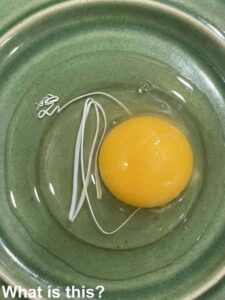
 - That Stringy White Thing In Your Egg Yolk: Here’s What It Actually Is
 You crack an egg into the pan for breakfast, and there it is — a twisted, rope-like white strand clinging to the yolk. For a split second, your brain jumps to the worst-case scenario. Is it a … Read more
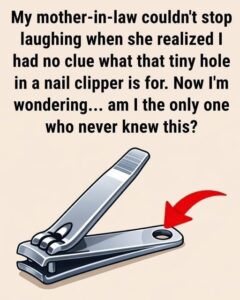
 - What Is That Tiny Hole in Your Nail Clippers Actually For?
 You’ve used a pair of nail clippers hundreds of times. You’ve trimmed, filed, and tossed them back in the drawer without a second thought. But somewhere on the handle, there’s a tiny round hole you’ve probably never … Read more
 - Anti-Aging Claims: Fact vs. Fiction in Skincare
 Viral posts like image often promise drastic, immediate results—claiming that wrinkles will disappear and youth will return to your face with a simple, secret recipe. It is natural to be drawn to these ideas, but it is … Read more
 - The Story Behind ‘Funeral Sandwiches’: A Comforting Culinary Tradition
 Food has an incredible ability to connect us to our history, our communities, and our most cherished—and sometimes somber—memories. When the term “funeral sandwiches” first pops up in conversation, it can certainly raise eyebrows. Yet, as noted … Read more
 - Oregano: Separating Traditional Wisdom from Modern Claims
 The viral image makes bold assertions about the strength of oregano as an antimicrobial agent compared to household staples like lemon and garlic. While oregano—specifically oregano oil—has been studied for its potential properties in laboratory settings, understanding … Read more
 - Cinnamon and Honey: Exploring the History of a Traditional Remedy
 For centuries, across various cultures, cinnamon and honey have been touted as a powerful combination in traditional medicine. Whether utilized to soothe a scratchy throat or added to a morning wellness routine, this duo is a staple … Read more
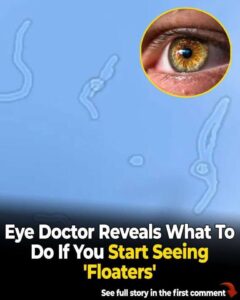
 - Understanding Eye Floaters: When Should You Be Concerned?
 It can be startling to suddenly notice small shapes, spots, or squiggly lines drifting through your field of vision, especially when looking at a bright, clear background like a blue sky. These are known as “eye floaters.” … Read more
 - Night Cramps: Understanding the Risk Factors and Real Causes
 Waking up in the middle of the night with a sudden, sharp pain in your calf is a distressing experience. Often, social media images like image_8f21e2.jpg circulate with vague, alarmist hints about the cause, but the reality … Read more
 - The Science of the Green Ring: Why Your Boiled Eggs Change Color
 If you have ever sliced into a perfectly hard-boiled egg only to find an unappealing greenish-gray ring around the yolk, you are not alone. It is a common kitchen frustration that leads many to wonder if the … Read more