
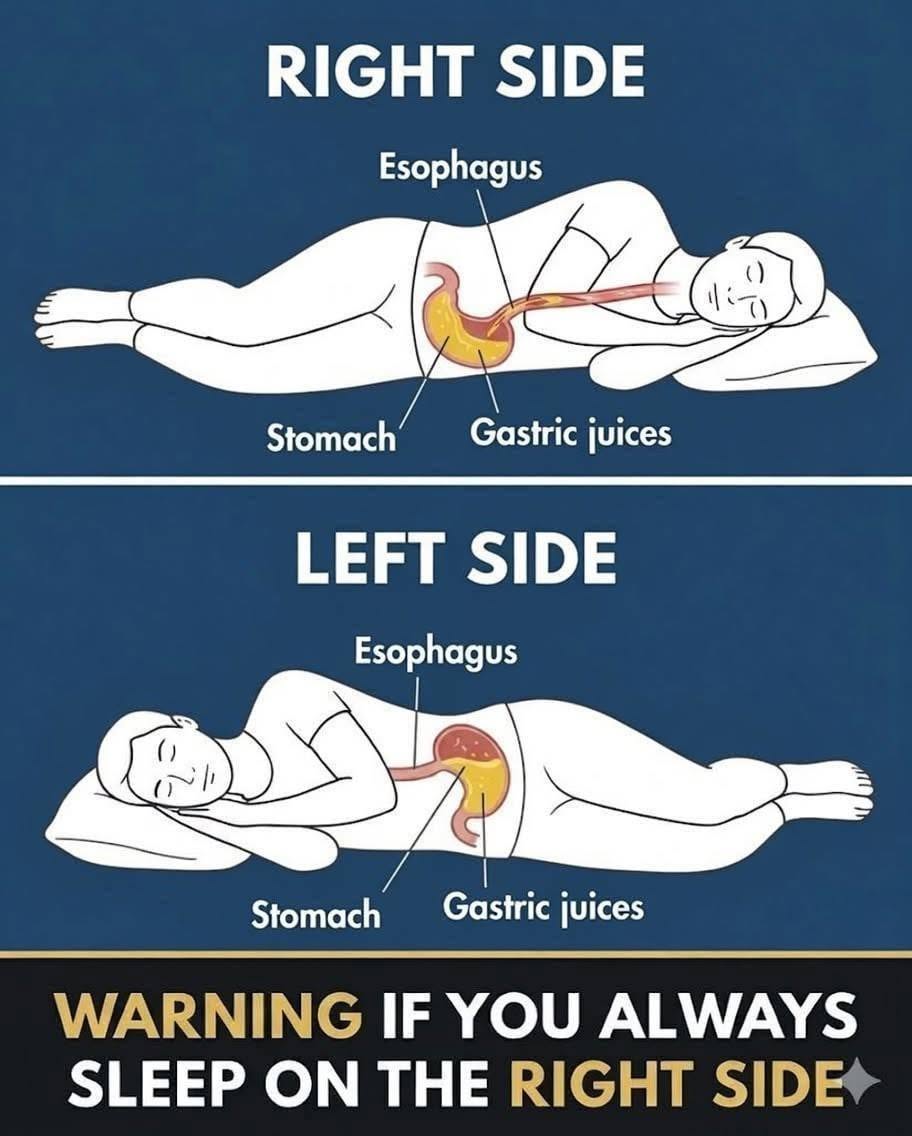
Many of us have a preferred sleeping position, often dictated by comfort or long-standing habits. However, as illustrated in image_e9c50c.jpg, the position in which you sleep can have physiological implications for your digestive system, particularly concerning how stomach acids interact with the esophagus. Understanding these basic anatomical relationships can be a helpful step in managing nighttime discomfort.
Anatomical Insights: Why Position Matters
The human stomach is shaped in a way that, when lying on your left side, the stomach sits lower than the esophagus. This anatomical positioning helps utilize gravity to keep gastric juices within the stomach, reducing the likelihood of them rising into the esophagus.
Conversely, as shown in image_e9c50c.jpg, lying on the right side can align the stomach and the esophagus in a manner that may make it easier for gastric contents to move upward, which is a common concern for individuals who experience acid reflux or heartburn while resting.