
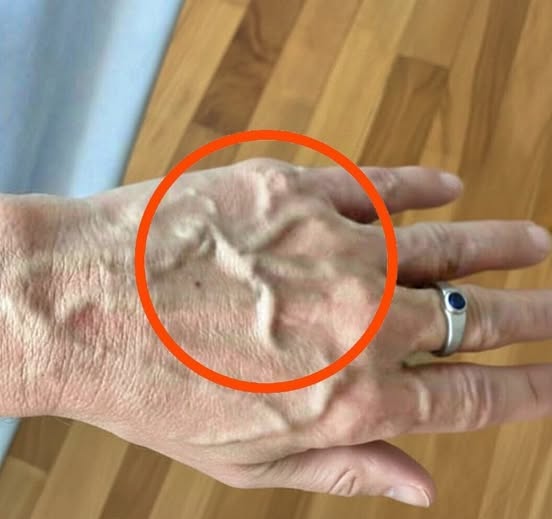
Just like the color of your eyes or your height, the structural depth and thickness of your vascular system are largely predetermined by your DNA. If your parents or grandparents had prominent, superficial veins on their hands, you are highly likely to inherit the exact same anatomical trait.
When Are Visible Veins Actually a Medical Concern?
While prominent veins are almost always cosmetic and natural, there are rare instances where a structural change in your veins warrants a conversation with a healthcare professional.
[Normal Vascularity]   ──> Flat or raised, painless, bluish/green color.
[Medical Evaluation]  ──> Swollen, warm to the touch, painful, or tender.
If your visible hand veins are accompanied by any of the following symptoms, it could indicate an underlying issue like superficial thrombophlebitis (a small blood clot in a surface vein) or localized inflammation:
- Sudden, localized swelling or hard lumps in a specific vein.
- Pain, throbbing, or deep tenderness when you touch the hand.
- Skin that feels distinctly warm, red, or irritated directly over the vein track.
- Open sores or ulcers developing near the wrist or fingers.