
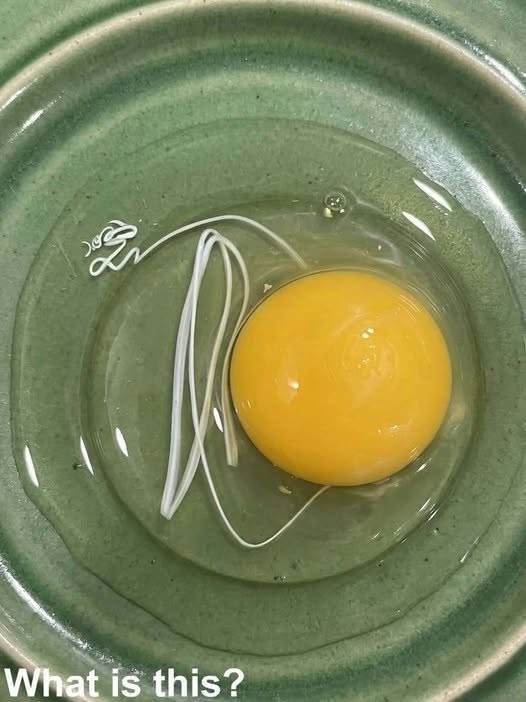
A surprising number of people believe the chalaza is either the beginning of an embryo or some kind of umbilical cord connecting the yolk to the shell. Neither is true. The eggs sold in grocery stores are unfertilized, meaning there’s no embryo present at all. The chalaza is simply protein, structurally similar to the rest of the egg white, and it has no connection to whether an egg could have developed into a chick.
Another common assumption is that a visible chalaza means something is wrong with the egg. In reality, it’s the opposite.
A Sign of Freshness, Not a Problem
A firm, clearly visible chalaza is actually a good sign. It tends to become less noticeable as an egg ages, so if you’re cracking eggs and see a nice, prominent strand, that’s a strong indicator you’re working with a fresh egg. Older eggs often have thinner, less defined chalazae, or none visible at all.
Is It Safe to Eat?
Yes, completely. The chalaza is made of the same protein as the rest of the egg white, so eating it poses no health risk whatsoever. Most people eat it every single time they cook eggs without ever noticing, since it tends to blend into scrambled eggs, baked goods, and most cooked dishes without a trace.
Should You Remove It?
For the vast majority of everyday cooking, there’s no reason to bother removing the chalaza. Scrambling, frying, baking, and boiling all break it down or make it invisible. There are a few situations, though, where removing it makes sense.
When Straining Matters
If you’re making something that depends on a perfectly smooth texture, like a custard, curd, or delicate steamed egg dish, the chalaza can leave a slightly tougher bit behind if it isn’t strained out. In those cases, passing your beaten eggs through a fine mesh sieve will catch the chalaza along with any shell fragments, leaving you with a silky, uniform mixture.
When You’re Separating Yolks and Whites
If a recipe calls for whipped egg whites, such as meringue,