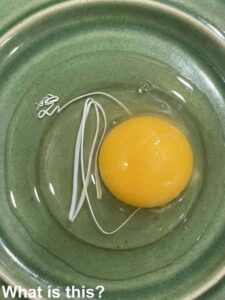
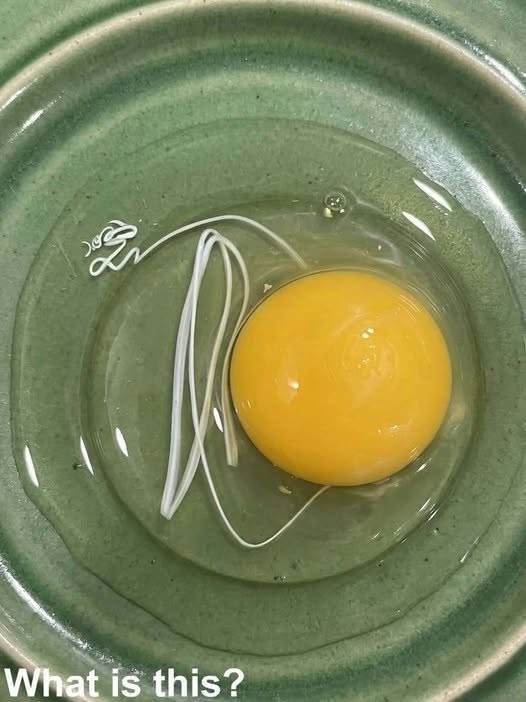
We have all been there: you are preparing a quick breakfast, you crack an egg into a pan or onto a plate, and suddenly, you stop in your tracks. There it is—a strange, white, ribbon-like structure clinging to the yolk. Your immediate reaction might be panic, disgust, or concern about food safety. Is it a parasite? Is the egg spoiled? Before you throw away your entire breakfast, let’s look at the science behind what you are actually seeing.
The Science of the Chalaza
That mysterious “white ribbon” is perfectly natural. In the culinary and poultry world, it is known as the chalaza (plural: chalazae).
Think of the chalaza as the egg’s internal anchoring system. Its primary biological purpose is to keep the yolk suspended in the center of the egg white (the albumen). Without these two twisted strands of protein, the yolk would simply sink to the bottom of the shell or stick to the side, which could make the egg more vulnerable to bacteria or damage.
Is It Safe to Eat?
The short answer is: Yes, it is 100% safe to eat. The chalaza is made of the same protein found in the rest of the egg white. It is not a worm, it is not a parasite, and it is certainly not a sign that your egg has gone bad. In fact, the presence of a prominent chalaza is actually a sign of a very fresh egg. As an egg ages, the chalaza begins to break down and become less visible. So, if you see one, you can actually consider it a mark of high quality!
Food Safety and Your Health
When dealing with health and medical concerns related to food, it is always wise to be observant. However, distinguishing between natural components of food and actual contaminants is a critical skill for any home cook. Just as you would research the terms of a mortgage or the fine print of a loan before making a major life decision, understanding the anatomy of the food you buy saves you from unnecessary stress and food waste.
Practical Tips for Kitchen Confidence:
- Don’t Panic: Most “strange” things found in eggs, such as chalazae or even small blood spots (caused by a ruptured blood vessel during formation), are natural and harmless.
- Storage Matters: Proper storage is your best insurance against spoilage. Always keep eggs refrigerated at a consistent temperature.
- Stay Informed: Reliable education on food safety will save you money on your grocery bill and help you maintain a healthier diet.
When Should You Actually Be Concerned?
While the chalaza is normal, you should still practice good food hygiene. If you crack an egg and notice any of the following, discard it immediately:
- Off-putting Odors: A sulfurous or “rotten” smell is the most reliable indicator of a spoiled egg.
- Discoloration: If the white is pink, green, or iridescent, it may be contaminated with bacteria like Pseudomonas.
- Foreign Objects: If you find anything that is clearly not part of the egg—such as actual debris—it is best to play it safe and throw it away.
Interesting Facts About Eggs
- Nutritional Powerhouse: Eggs are one of the few foods that are a complete source of protein, containing all nine essential amino acids.
- Quality Grading: Eggs are graded by the USDA based on the condition of the shell, the size of the air cell, and the clarity of the white. A clear white with a visible chalaza is standard for Grade AA.
- Global Cuisine: Eggs are the backbone of cooking worldwide, from delicate French meringues to hearty breakfast dishes, serving as a versatile and affordable staple for every business and household.
Conclusion
The next time you see that little white ribbon, take a deep breath and keep cooking. It’s simply nature’s way of holding the yolk in place. By understanding the anatomy of what you eat, you can move past the initial shock and get back to enjoying your meal with confidence.
FAQ Section
Q: Why do some eggs have bigger chalazae than others?
A: The size and prominence of the chalaza can depend on the age of the chicken, the breed, and the freshness of the egg. Fresh eggs almost always have more visible chalazae.
Q: Can I remove the chalaza before cooking?
A: You certainly can! If the texture bothers you, just use a fork to lift it out before you scramble or fry the egg. It won’t affect the nutritional value or the taste.
Q: Does a blood spot mean the egg is fertilized?
A: No, commercial eggs sold in grocery stores are unfertilized. A blood spot is just a minor rupture of a blood vessel on the yolk surface during the egg’s formation inside the hen.
Q: Does this happen with organic or free-range eggs more often?
A: You might notice it more in farm-fresh eggs because they are often collected and used much faster than mass-produced eggs, which are processed and stored for longer periods.