
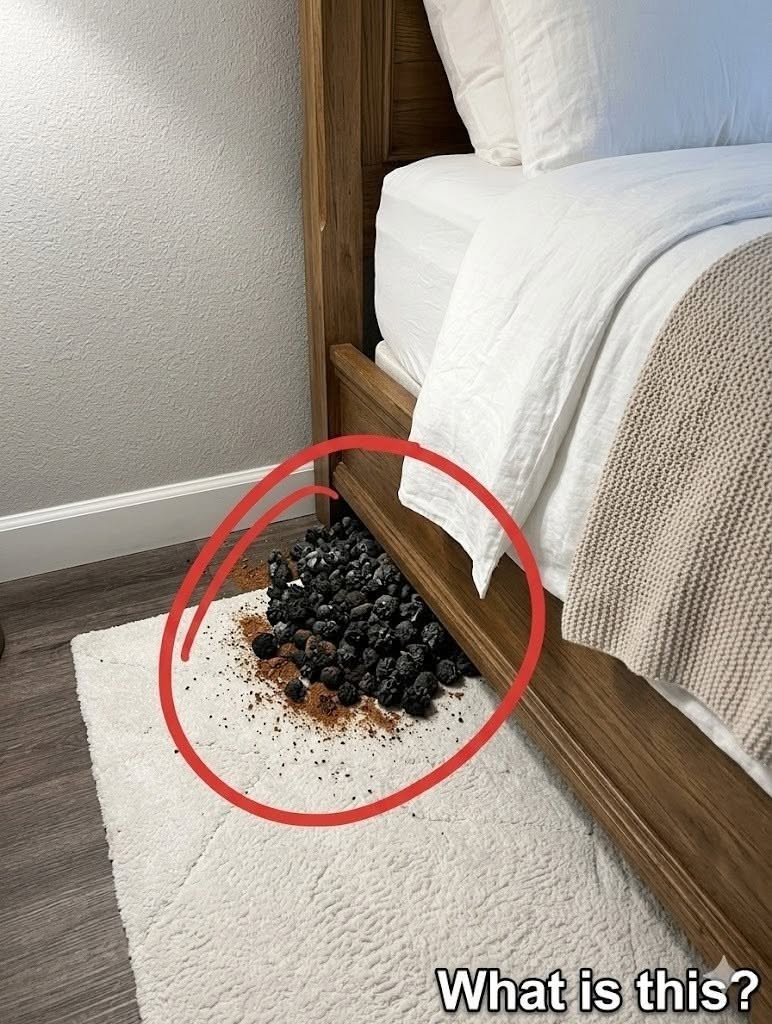
Imagine waking up, stepping out of bed, and looking down to see a mysterious, dark, crumbly pile spilling out from right beneath your bed frame onto your clean rug. For anyone who prides themselves on a clean home, discovering an unidentifiable mess like the one in this photo is an instant recipe for anxiety.
Your mind immediately races to the worst-case scenarios: Is it a massive infestation of a destructive pest? Could it be a dangerous, toxic mold growth bubbling up from the floorboards? Or is it evidence of a structural hazard hidden inside the walls?
Let’s investigate the most common culprits behind mysterious, dark piles under the bed, separate the harmless accidents from the genuine household emergencies, and reveal what this disturbing sight actually points to.
The Top 3 Suspects: What Causes Mysterious Piles Under Furniture?
When dark, organic-looking debris accumulates in a concentrated heap under heavy furniture, it usually traces back to one of three major household issues:
1. Severe Pest Infestations (Frass and Droppings)
One of the most alarming reasons to find a sudden pile of debris is pest activity.
-
Termites: Drywood termites kick out small, rigid, oval-shaped pellets called frass from their galleries inside wooden structures. If a bed frame or the wall behind it is heavily infested, large piles of wood-colored or dark pellets can accumulate directly underneath the exit holes.
-
Mice or Bats: A concentrated pile of dark, uniform pellets can indicate a nesting site or a frequent runway for rodents or bats hiding within the mattress base, headboard, or an opening in the wall.
2. Deteriorating Furniture Core Materials
Many modern headboards, mattresses, and upholstered bed frames rely on internal structural elements that degrade rapidly over time.
-
Dry Rot and Crumbering Foam: Older furniture often contains interior layers of polyurethane foam, rubberized coconut coir, or treated organic packing material. When exposed to internal friction, age, or moisture, these materials dry out, disintegrate, and break down into dark, charcoal-colored chunky crumbs that spill out from the bottom lining of the fabric.
-
Borer Beetles: If the bed frame is made of untreated or old wood, wood-boring beetles can slowly turn the interior of the timber to dust, causing chunks of weakened wood and boring dust to drop to the floor.
3. Hidden Pet Hoarding or Spills
Never underestimate the secret lives of indoor pets. Cats, dogs, and ferrets notoriously use the dark, protected void beneath a bed as a private sanctuary. It is incredibly common for pets to carry household items, outdoor debris, or stolen dried food under the bed, chewing them down into an unrecognizable, terrifying pile over weeks without the owner noticing until the mess spills out.
The Disturbing Truth: Assessing the Damage
If you encounter a localized heap of dark material like the one circled in the photo, determining the immediate threat level is crucial. Take a closer look (safely using gloves and a flashlight) to identify the texture:
-
If it is hard, uniform, and granular: It is highly likely to be pest-related (pellets or insect frass). Check the wood surfaces directly above the pile for tiny, pin-sized exit holes.
-
If it is soft, fibrous, or powdery: It points toward a material failure—such as a disintegrating box spring liner, decaying internal foam, or a shredded mattress core.
-
If it is damp and smells earthy: You could be dealing with an advanced fungal or mold issue thriving in an area with high humidity or an undetected subfloor pipe leak.
What to Do Immediately When You Find a Mystery Mess
If you find a deeply unsettling pile under your bed, follow these steps to handle it safely and effectively:
-
Do Not Vacuum it Immediately: If the pile consists of toxic mold spores or fine pest droppings, a standard vacuum cleaner can exhaust the particles back into the air, causing respiratory irritation or spreading spores across your bedroom.
-
Inspect the Substructure: Put on a protective mask and gloves, lift the mattress, and thoroughly inspect the wooden slats, the underside of the box spring, and the drywall directly adjacent to the pile. Look for holes, chew marks, or structural sagging.
-
Seal a Sample: Use a disposable plastic bag to collect a small portion of the debris. If you need to call a pest control professional or a mold specialist, having a clear sample will help them identify the root cause instantly.
-
Deep Clean the Area: Once the source is identified and safely removed, sanitize the entire area with an appropriate disinfectant or anti-microbial treatment to protect your sleeping environment.
The Bottom Line
While discovering a bizarre, dark heap right next to where you sleep is deeply spooking, it isn’t an unsolvable mystery. Whether it turns out to be an old bed frame losing its structural integrity from the inside out, or an unwelcome visit from local pests, catching it early is the key to protecting both your health and your home.