When we look at our reflection, we often focus on muscle tone or fitness levels. However, the natural structural alignment of your legs—the way your hips, knees, and ankles line up when standing straight—tells a much deeper story about your skeletal biomechanics and joint health.
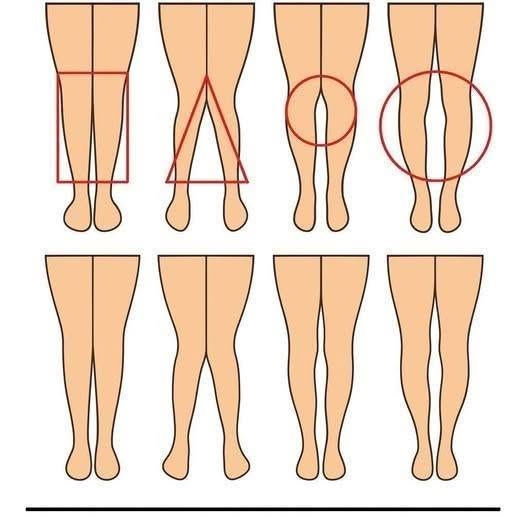
Graphics showcasing different leg alignments frequently circulate online, raising questions about what is considered normal variation and what might lead to issues down the road.
Let’s break down the science of lower limb alignment, explore the common structural types (such as bowlegs and knock-knees), and explain how your alignment impacts your long-term joint health.
The Biomechanics of Leg Alignment
In a perfectly aligned skeletal structure, a straight line can be drawn from the center of the hip joint, through the middle of the knee joint, down to the center of the ankle. This ensures that your body weight is distributed evenly across your lower joints when walking, running, or standing.
When structural variations alter this straight path, the mechanical load shifts unevenly. Over time, this localized pressure can affect the cartilage in your joints, your gait, and even your lower back.
Understanding the Common Alignment Types
Most people fall into one of a few distinct structural categories, which are usually determined by genetics, bone development, or ligament laxity:
1. Standard Linear Alignment
In this pattern, the legs descend relatively straight and parallel, with the knees and ankles meeting gently at the midline. This structure evenly distributes weight across both the inner (medial) and outer (lateral) compartments of the knee joint, minimizing premature wear and tear.
2. Genu Valgum (Knock-Knees)
Commonly referred to as being knock-kneed, this alignment features knees that angle inward and touch or come very close together when standing, while the ankles remain spaced apart.
-
The Impact: This shifts your body weight primarily to the outer compartment of the knee joint and can place extra strain on the hip stabilizers and the arches of the feet, sometimes leading to flat feet over time.
3. Genu Varum (Bowlegs)
Often called bowleggedness, this structure is the exact opposite of knock-knees. When standing with the ankles close together, the knees stay distinctly bowed outward, creating a visible gap between them.
-
The Impact: This alignment places increased pressure on the inner compartment of the knee joint. Over decades, this uneven weight distribution can increase the risk of localized cartilage wear on the inside of the knee.
4. False Curvature or Postural Variations
Sometimes, the bones themselves are perfectly straight, but muscle imbalances, tight hip rotators, or hyperextended knees (genu recurvatum) create the illusion of bowing or twisting. These variations are often highly responsive to targeted physical therapy and corrective movement patterns.
Why Alignment Varies: Nature vs. Habit
If you notice your leg alignment matches one of the curved patterns, it is typically driven by a couple of major factors:
-
Genetics and Bone Growth: The primary factor dictates the natural angle of your femur (thigh bone) and tibia (shin bone). Slight variations in how these bones fuse during childhood shape adult alignment.
-
Ligament and Muscle Laxity: Naturally flexible ligaments can allow joints to rotate or shift slightly outward or inward under weight-bearing conditions.
Managing and Supporting Your Alignment
For the vast majority of adults, a slight variation in leg alignment is simply a unique physical characteristic that requires no drastic intervention. However, supporting your joints through smart daily habits can keep your musculoskeletal system happy:
-
Strengthen Supporting Muscles: Building strong quadriceps, hamstrings, and gluteal muscles helps stabilize the knee and hip joints, absorbing impact that would otherwise strain the cartilage.
-
Choose Supportive Footwear: Orthotic inserts or shoes with proper arch support can help correct sub-optimal foot mechanics caused by inward or outward leg angles.
-
Low-Impact Conditioning: If you have highly bowed or knock-kneed alignment, incorporating low-impact exercises like swimming, cycling, or rowing can help maintain cardiovascular health without placing heavy, repetitive stress on the knees.
The Bottom Line
Every body is built slightly differently, and variations in leg alignment are an incredibly common part of human diversity. Understanding your structural baseline simply allows you to make informed decisions about your fitness routine, footwear, and joint care, ensuring your body stays moving comfortably for years to come.