
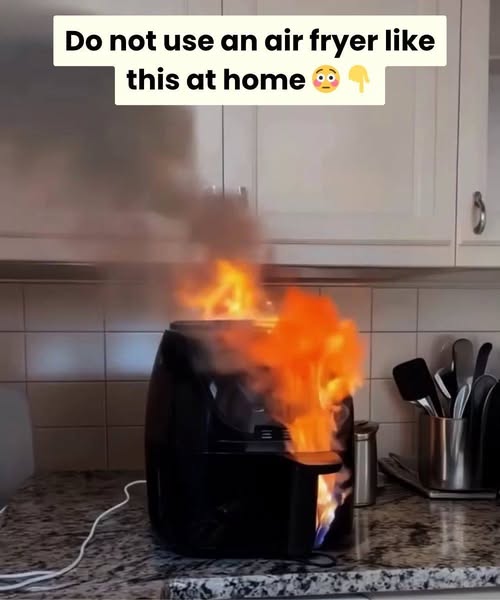
The rise of the air fryer has completely transformed the modern home kitchen. Thanks to their lightning-fast cooking speeds and ability to turn ordinary food beautifully crisp with minimal oil, these compact counter companions have become a daily staple for millions.
However, because air fryers are highly portable, many home cooks treat them like blenders or toasters—plugging them in wherever there is an empty patch of counter space. This is a critical mistake. Air fryers operate using incredibly powerful convection currents and high-wattage heating elements, venting substantial heat and exhaust out of their rear ports.
To keep your home, your countertops, and your family entirely safe, fire safety experts and appliance manufacturers warn that you should never operate an air fryer in these 5 indoor locations.
1. Directly Underneath Low Kitchen Cabinets
It is incredibly tempting to slide your air fryer back under the upper kitchen cabinets to keep it neatly out of the way while it cooks. However, this is one of the most common causes of kitchen damage.
Air fryers vent massive columns of hot steam and air from the back of the machine. When trapped beneath a cabinet, this intense heat cannot escape. Over time, the trapped moisture and heat will warp your cabinetry wood, melt protective laminates, peel off paint, or damage underlying electrical wiring.
-
The Safe Move: Always pull your air fryer completely forward, out from underneath any overhead cupboards, ensuring the top and back of the machine have clear access to open air.
2. Pushed Directly Against Drywall or Backsplashes
Counter space is a luxury in most homes, leading many drivers of the kitchen to push appliances flush against the back wall. When you block the exhaust vent of an air fryer by forcing it up against a wall, two major hazards occur:
-
Overheating: The internal cooling fan can no longer pull or exhaust air efficiently, forcing the heating element to work double-time and increasing the risk of an internal electrical fire.
-
Surface Scorching: The concentrated heat blasting directly onto the wall can permanently discolor tile grout, crack delicate glass backsplashes, or char drywall.
THE HAND-SPAN VENTILATION RULE
+-------------------+-----------------------------------+
| Side of Appliance | Minimum Clearance Required        |
+-------------------+-----------------------------------+
| Rear Exhaust Vent | 5 Inches (Average Hand Length)    |
| Left & Right Sides| 4 Inches                          |
| Top of Unit       | Completely unobstructed to ceiling|
+-------------------+-----------------------------------+
3. On Top of Your Stovetop (Even When It’s Off)
Fire departments across the country report a massive surge in emergency calls due to air fryers being placed on top of stovetops. It seems like a logical spot—it sits directly underneath your range hood’s exhaust fan.
The danger lies in human error. It is incredibly easy to accidentally bump a knob, turn on the wrong burner, or have a child or pet activate a touch-sensitive induction cooktop. If the burner beneath your air fryer ignites, the plastic housing of the appliance will melt and catch fire in a matter of seconds, creating a toxic, rapid-spreading grease fire.
-
The Safe Move: Keep your air fryer completely off the stove. If you need to use the range hood fan, place the air fryer safely on an adjacent countertop and angle the machine’s vent toward the fan instead.
4. On Heat-Sensitive Surfaces (Wood, Laminate, or Tea Towels)
The basket of an air fryer retains incredible thermal energy. Many users make the mistake of pulling the scorching hot basket out and resting it directly onto plastic cutting boards, raw wood, laminate countertops, or even protective fabric tea towels.
Worse yet, some run the actual base of the machine directly on a towel to catch crumbs. Fabric underneath the machine restricts lower air intake, turning a simple cotton cloth into a prime source of fuel for a fire.
-
The Safe Move: Always operate your air fryer on a flat, non-flammable, heat-resistant surface like stone, quartz, or tile. When removing the hot basket, always set it down on a thick silicone trivet or a heavy ceramic pot coaster.
5. Tight Corners or Enclosed Pantries
Plugging your air fryer in inside a tight corner corner, a closed appliance garage, or an enclosed walk-in pantry is a recipe for restricted airflow. Without an open, continuous supply of ambient air, the machine will continuously pull its own hot exhaust back into the internal system, leading to uneven cooking and eventual motor burnout.
-
The Safe Move: Give your appliance room to breathe. Keep it in a well-ventilated area of the kitchen, far away from corner clusters, loose paper towels, or heavy kitchen curtains that could easily drift toward the exhaust vent.
The Bottom Line
Air fryers are exceptionally safe, reliable appliances when their basic engineering principles are respected. By practicing the hand-span rule—leaving roughly 5 inches of free space around all sides of the unit—and keeping it away from flammable materials and overhead wood cabinets, you can continue to enjoy perfectly crisp, convenient meals with total peace of mind.