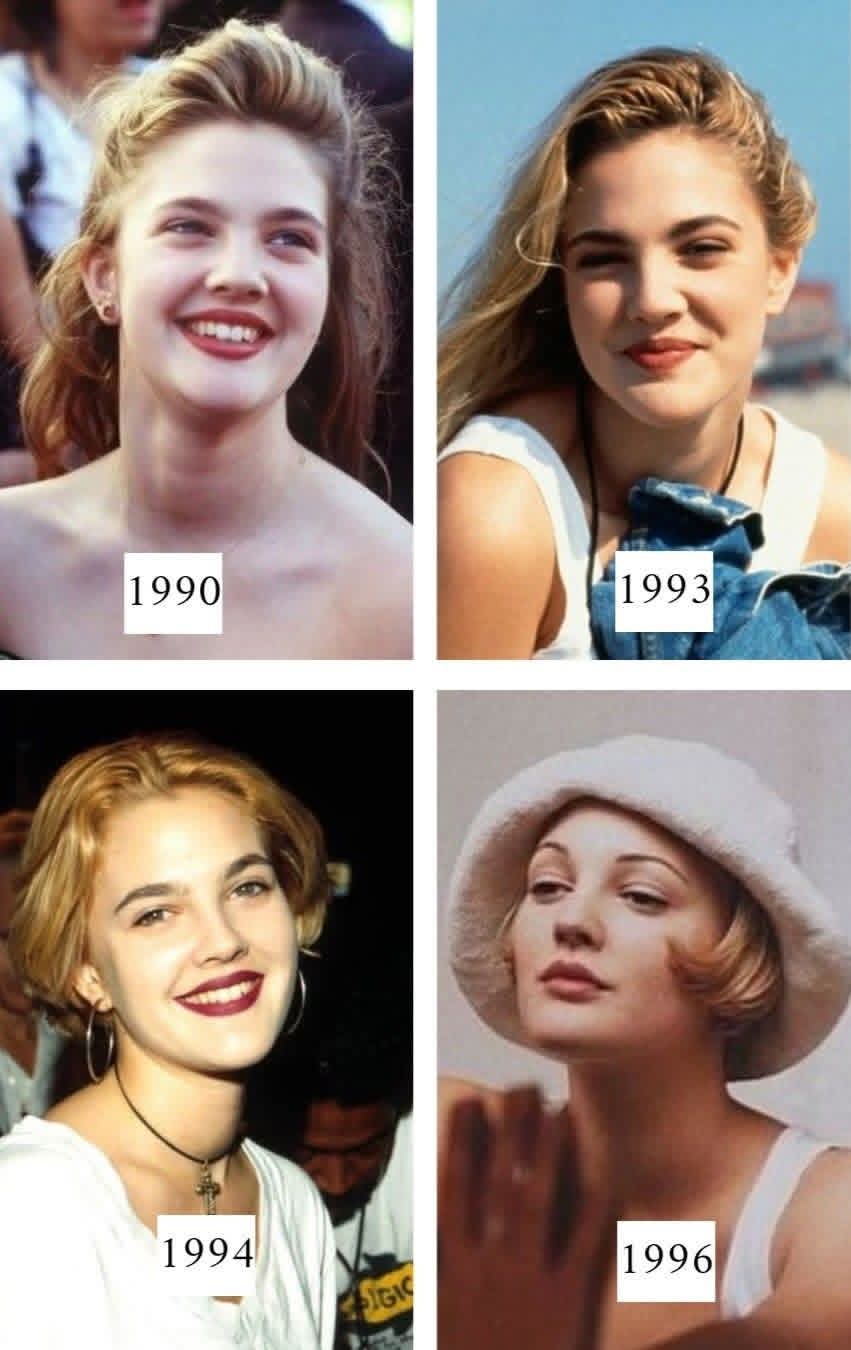
The 1990s was a decade defined by radical shifts in culture, music, and—most visibly—fashion. When we look at iconic figures from that era, such as the incomparable Drew Barrymore, we aren’t just seeing a snapshot in time; we are looking at the evolution of an entire generation’s aesthetic. From the rebellious, grunge-inspired looks of the early 90s to the more refined, minimalist glamour of the late 90s, the transformation of style icons like Drew serves as a blueprint for how we define “cool” even today.
The 1990–1993 Transition: Youthful Innocence to Grunge
In the early 90s, the aesthetic was characterized by a certain raw, unpolished energy. It was the era of the flannel shirt, the slip dress, and a departure from the excessive neon and big hair of the 80s. For many, this was a time of experimentation. The look was about authenticity—a stark contrast to the highly curated, filter-heavy world we live in now.
This era teaches us a valuable lesson about business and personal branding: evolution is inevitable. Just as you might pivot your investment strategy or adjust your career path to stay relevant, icons like Drew showed us that shifting your look is a way of adapting to new chapters in life.
The 1994–1996 Shift: Glamour Meets Minimalism
By the mid-to-late 90s, the style pendulum swung toward a more defined, sophisticated look. The deep lip colors, the bob haircuts, and the rise of “it girl” chic became the standard. This period was less about grunge and more about confidence.
This transition reminds us that our personal style is an asset. Much like managing your credit or ensuring you have the right insurance coverage, refining your image—or your personal “brand”—is about knowing who you are and what you want to project to the world. It’s an investment in how you are perceived in both professional and social settings.
The Psychology of Transformation
Why are we so obsessed with these transformations? Because they offer a sense of hope. Seeing someone change their look, their vibe, and their energy over the course of a few years reminds us that we, too, have the power to reinvent ourselves.
- The Power of Reinvention: You are not locked into your current look or life path. Whether you are seeking a new education, changing your medical habits, or finding a new attorney to guide your legal services, you have the freedom to evolve.
- The Role of Technology: While the 90s were pre-social media, today’s technology allows us to document these changes instantly. This gives us a clearer record of our personal growth, though it also creates pressure to maintain a certain image.
- Finding Your Signature: Throughout these transformations, icons often keep one or two “signature” elements—a certain smile, an attitude, or a preference for simplicity. That is the secret to enduring appeal.
Practical Tips for Your Own Evolution
- Document Your Journey: Don’t be afraid to look back at old photos. They are the best way to understand your personal style evolution.
- Prioritize Self-Care: Whether it’s your skin health or your mental well-being, the best “look” is one that comes from a place of genuine care for yourself.
- Budget Wisely: You don’t need a massive loan or an unlimited bank account to find your style. Focus on timeless pieces that make you feel confident, just as you would build a solid foundation for your retirement portfolio.
- Trust Your Intuition: When you see a trend, ask yourself: “Does this feel like me?” If the answer is no, skip it.
Interesting Facts About 90s Fashion
- The Comeback: Much of 90s fashion—from bucket hats to choker necklaces—has made a massive comeback in the 2020s, proving that good design is cyclical.
- Global Influence: The 90s was the first decade where global trends, fueled by cable TV and music videos, spread to every corner of the world simultaneously.
- The “Heroine Chic” Controversy: While the mid-90s were iconic, they were also controversial due to the emphasis on an extremely thin aesthetic. Today, we celebrate a much broader, more inclusive definition of beauty.
Conclusion
The transformation of a style icon is a reminder that life is a series of chapters. By embracing change, refining our tastes, and staying true to our core identity, we can all become icons in our own right. Whether you are living a life of quiet luxury or fast-paced adventure, the best aesthetic is the one that makes you feel the most you.
FAQ Section
Q: Why do 90s trends keep coming back?
A: Fashion is nostalgic. Every 20 to 30 years, the generation that grew up in a specific era gains the cultural and financial power to influence trends, leading to a resurgence of that era’s aesthetic.
Q: How can I adopt a 90s aesthetic without looking like I’m in a costume?
A: The trick is to pick one or two elements—like a slip dress or a specific hair style—and mix them with modern, contemporary pieces for a balanced look.
Q: Does style impact professional success?
A: Yes, in the sense that confidence is a professional asset. When you feel good in what you are wearing, it reflects in your demeanor, which is vital when navigating business negotiations or seeking a new job.
Q: Should I try to follow every trend?
A: No. Trying to keep up with every trend is exhausting and expensive. Focus on building a “capsule wardrobe” of items you love, which is much better for your long-term finance and personal style.