
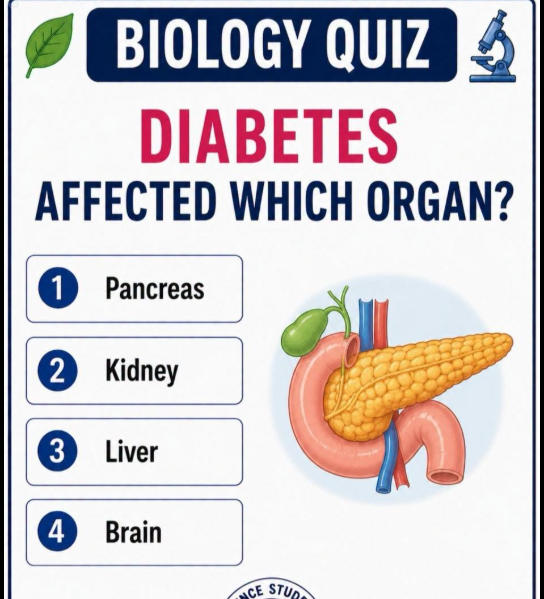
What makes this viral quiz brilliant for generating social media arguments is that advanced diabetes eventually causes severe complications in the other three listed organs. If you browse the comment section, you will see hundreds of people arguing for the other choices based on personal or family medical histories.
Option 2: The Kidneys (Diabetic Nephropathy)
Your kidneys act as the body’s ultimate filtration system, clearing waste from your blood via millions of microscopic blood vessel structures called nephrons. High blood sugar levels over many years act like sandpaper on these delicate vessels. When the filtering system is structurally damaged by chronic hyperglycemia, it leads to kidney disease or total failure.
Option 3: The Liver (Insulin Resistance and Fatty Liver)
The liver and the pancreas are constant communication partners. When blood sugar is high, insulin tells the liver to store extra glucose for later. In Type 2 diabetes, when insulin signals fail, the liver gets confused and continues to pour extra sugar into the blood while simultaneously storing excess energy as fat. This frequently results in Non-Alcoholic Fatty Liver Disease (NAFLD).
Option 4: The Brain (Vascular and Neurological Risks)
The brain is the most energy-intensive organ in the body, relying entirely on a steady supply of glucose. Because diabetes damages blood vessels of all sizes, it restricts optimal blood flow to the brain. This significantly increases a person’s risk for strokes, nerve damage (neuropathy), and cognitive decline over time.
📊 Quick Tips for Metabolic and Pancreatic Health
Protecting your pancreas from insulin burnout doesn’t require a radical overhaul—small, daily choices compound over time to shield your metabolic framework:
- Prioritize Fiber and Whole Foods: Swapping out refined sugars for complex carbohydrates (oats, legumes, vegetables) prevents massive glucose spikes, giving your pancreas a break from pumping out emergency surges of insulin.
- Incorporate Daily Movement: Physical activity drastically increases insulin sensitivity, allowing your muscles to absorb glucose directly from your blood without forcing your pancreas to do all the heavy lifting.
- Stay Consistent with Health Screenings: Just as routine checks keep your lifestyle running smoothly, tracking your Fasting Blood Sugar or HbA1c levels annually helps catch insulin resistance early before permanent pancreatic damage occurs.
Test Your Friends!
Did you spot the pancreas right away from the diagram, or did your brain try to argue for one of the organs affected by the complications? Drop your original answer below, and share this quick biological breakdown with your circle to see who can identify the true engine behind blood sugar control!
📌 Copy & Paste: First Comment Hook to Pin on Social Media
The Right Answer: 1) Pancreas! 🩺 The pancreas is the vital organ responsible for producing insulin, which acts as the “key” to let sugar into your cells for energy. When it can’t produce enough insulin, it leads directly to diabetes. While diabetes can eventually cause damage to the kidneys, liver, and brain, the root of the condition always points right back to the pancreas. Give yourself a pat on the back if you got this biology check right! 🧠👇