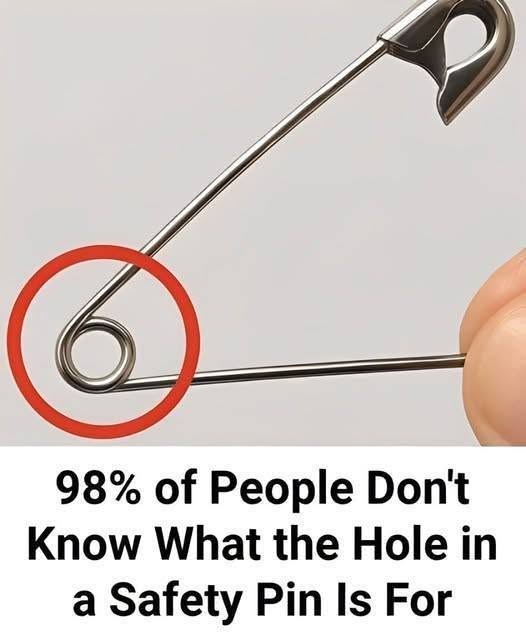
Thinking about the design of a safety pin can actually teach us something about our personal finance. The “tension” created by the spring is what keeps the pin from opening and causing harm. Similarly, the “tension” in your budget—balancing your spending with your retirement contributions—is what keeps your financial house from falling apart. If you relax the tension too much, things fall through the cracks. If you keep it too tight, the structure might break. Finding that balance is the key to long-term success.
Interesting Facts About Safety Pins
- The Patent: Walter Hunt invented the modern safety pin in 1849, reportedly to pay off a $15 debt. He sold the patent for a mere $400—a cautionary tale for anyone in the technology or startup sector!
- Medical Essential: For decades, safety pins were a staple in medical kits for securing bandages and splints in emergency situations.
- Versatility: The safety pin has been used for everything from makeshift medical gear to high-fashion jewelry, proving that great design transcends its original intent.
Conclusion
The next time you reach for a safety pin, take a second to appreciate that tiny coil. It is a reminder that even in a world obsessed with complex high-tech solutions, the simplest inventions are often the ones that stand the test of time. Much like building a solid education or a robust professional network, the most secure structures are built on reliable, fundamental principles.
FAQ Section
Q: Why is the coil shaped like a circle?
A: The circular shape allows for maximum spring tension and flexibility. If the wire were just bent at an angle, it would lose its “springiness” after only a few uses and eventually snap.
Q: Can a safety pin really damage fabric?
A: Yes, if the point is dull or if the pin is too thick for the material. Always use the smallest pin possible for delicate fabrics like silk or satin to prevent permanent holes.
Q: Is there a difference between “safety” pins and regular straight pins?
A: Yes, the “safety” aspect is the clasp that covers the sharp point, preventing accidental pricks and ensuring the pin stays in place—a critical safety feature in daily use.
Q: How can I safely store safety pins?
A: Keep them in a closed container, or pinned into a magnetic pincushion to prevent them from scattering, which is both a safety risk and a nuisance to clean up.