
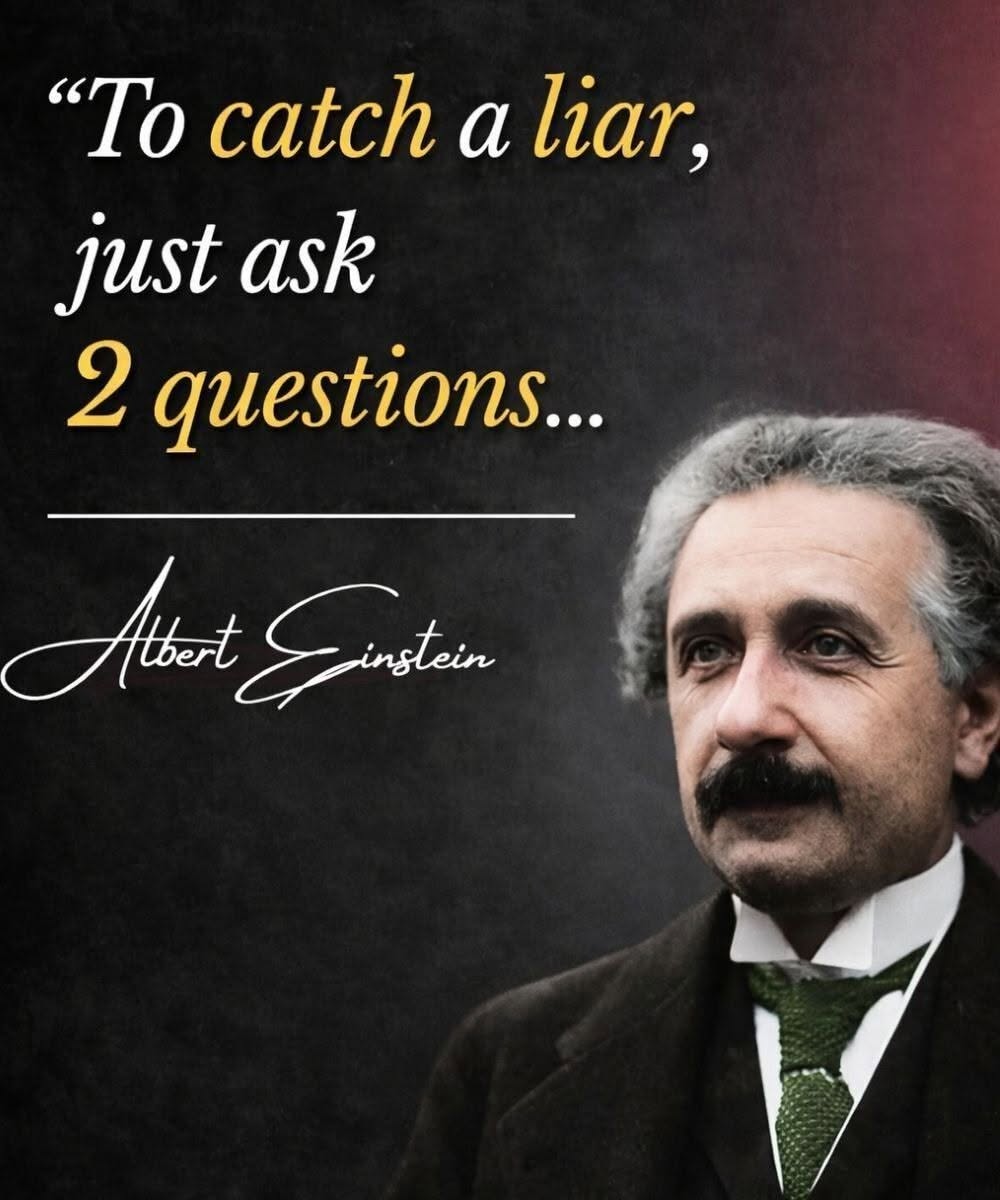
Human communication is a deeply intricate web of spoken words, silent gestures, and psychological undercurrents. Throughout history, understanding the mechanics of honesty and deception has fascinated scholars, scientists, and everyday individuals alike. As highlighted by the compelling visual statement in image featuring Albert Einstein, discovering how to uncover dishonesty often comes down to asking the right strategic questions. Instead of relying on guesswork, modern behavioral psychology points to specific cognitive strategies that reveal the truest intentions of an individual.
Understanding the Dynamics of Deception
Detecting when someone is being less than truthful is not about looking for a magical physical tell, like a growing nose. Rather, it is a complex cognitive science. When a person is not speaking the truth, their brain experiences what psychologists call cognitive load. This means that maintaining a false narrative requires significantly more mental effort, strategy, and memory than simply stating the absolute truth.