
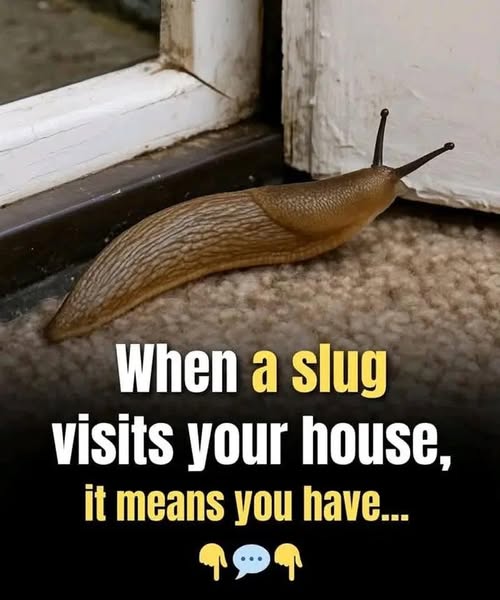
Few things disrupt a quiet evening at home quite like stepping onto a cold, slimy trail left behind by an uninvited slug. Unlike flying pests or highly active rodents, slugs are slow, deliberate travelers. When they manage to cross your threshold and enter your living space, it is rarely a random accident. Instead, their presence serves as a highly reliable biological message.
In various folklore traditions, a slug entering the home carries unique spiritual meanings ranging from a call for patience to a reminder to protect your personal energy. However, in the realm of modern home maintenance, a slug visit is a clear, physical warning sign about your property’s current environmental health.
Let’s break down exactly what attracts these terrestrial gastropods indoors, what their presence tells you about your house, and how to safely guide them back outside.
The Main Trigger: Hidden Moisture and Humidity
Slugs are soft-bodied mollusks made almost entirely of water. Because they lack a protective shell like their snail cousins, they are incredibly vulnerable to desiccation (drying out). To survive, they must constantly remain in high-moisture environments.
If a slug enters your home, it means your living space has met their strict survival criteria:
-
High Ambient Humidity: Slugs can track moisture gradients in the air. Basements, crawlspaces, poorly ventilated kitchens, and bathrooms with lingering steam act like behavioral magnets.
-
Micro-Dampness: Slugs are often attracted to the condensation that pools around leaky plumbing fixtures, under-sink pipes, or water heater bases.
-
Decaying Organic Material: A hidden leak behind a baseboard can cause structural wood or drywall to soften and grow mold. To a slug, this damp, decaying material is a prime source of food.
The Structural Message: Points of Entry
Because slugs lack bones and possess incredibly flexible, muscular bodies, they can squeeze through spaces that seem impossibly small. Seeing one inside means your home’s structural envelope has compromised gaps that are letting the outside world in.
Common entry points include:
1. External Door Clearances
The rubber weatherstripping at the bottom of exterior doors naturally degrades over time. If a sliver of light can pass beneath your door at night, a slug can easily glide right under it.
2. Utility Pipe Penetrations
Pipes feeding your washing machine, outdoor spigots, or radiator lines pass through holes drilled into your walls or floors. If these gaps aren’t completely sealed with expanding foam or silicone caulk, they serve as perfect underground highways for nocturnal pests.
3. Foundation and Subfloor Cracks
Older homes with stone foundations or settling concrete floors often develop hairline fractures. Because slugs prefer dark, subterranean environments during the heat of the day, they utilize these cracks to transition from damp soil straight onto your carpets.
Simple Ways to Protect Your Space
If you want to ensure your home remains dry, secure, and entirely free of slimy trails, you can implement a few straightforward adjustments:
HOME FORTIFICATION CHECKLIST
+-------------------------+-------------------------------------------------+
| Vulnerable Area         | Preventive Action Plan                          |
+-------------------------+-------------------------------------------------+
| Door Thresholds         | Replace worn weatherstripping and door sweeps   |
| Under-Sink Plumbing     | Inspect joints for slow leaks; seal wall gaps   |
| Perimeter Foundation    | Clear away wet leaf piles and dense ivy growth  |
| Basements & Laundries   | Run a dehumidifier to keep moisture below 50%   |
+-------------------------+-------------------------------------------------+
-
Create a Natural Border: If you have an outdoor garden bed pressing directly against your home’s siding, consider replacing the first foot of soil with dry gravel or coarse sand. Slugs despise traveling over rough, sharp, or dry textures.
-
Keep Outdoor Lights Clean: Many slug species are naturally drawn to the cool, damp microclimates created beneath low-voltage garden lights and porch fixtures. Switching to yellow LED bug lights can reduce the evening traffic near your entryways.
The Bottom Line
A slug visiting your home isn’t an overnight disaster, but it is a helpful wake-up call from nature. By viewing them as a natural moisture alarm, you can track down hidden leaks, seal up old structural gaps, and ensure your home stays dry, comfortable, and secure for the seasons ahead.