
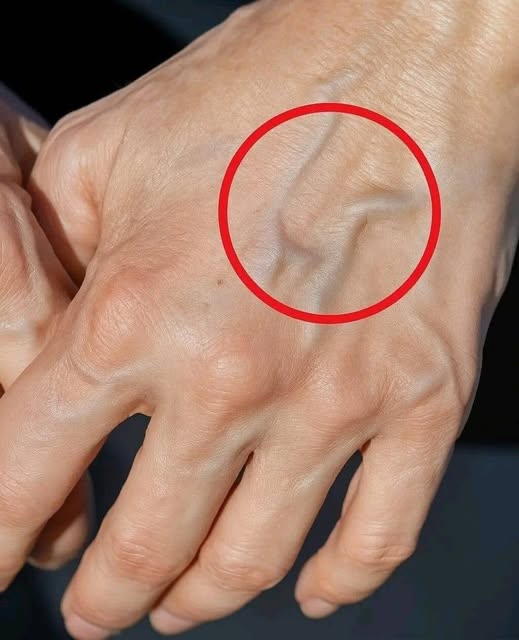
Have you ever looked down at the back of your hands and noticed prominent, bulging, or twisting blue veins? For many people, these raised veins can look a bit startling, leaving them wondering if it is a sign of a serious cardiovascular issue or just a normal part of getting older
The image of a hand with a highly visible, winding vein is incredibly common. But what exactly causes the veins in your hands to stand out so dramatically, and when should you actually be concerned?
Let’s dive into the science behind protruding hand veins, the most common causes, and how to tell the difference between a cosmetic quirk and a medical issue.
The Anatomy of Hand Veins
To understand why hand veins bulge, it helps to understand how they work. The veins visible on the back of your hand are superficial veins. Their primary job is to pump blood back up toward your heart.
Unlike the arteries, which have thick muscular walls to handle high-pressure blood pumped directly from the heart, veins have much thinner walls and operate under lower pressure. They rely on tiny, one-way valves to keep blood flowing in the right direction. When anything interferes with this flow—or when the skin above the veins changes—they become much more visible.
Top 5 Causes of Bulging Hand Veins
If you notice your hand veins popping out, it is usually due to one (or a combination) of the following completely normal factors:
1. Aging and Skin Thinning
This is the most frequent culprit. As we age, our skin naturally loses collagen and elastin, making it thinner and less elastic. At the same time, we lose the subcutaneous fat layer on the back of our hands. With less fat and thinner skin to camouflage them, the veins underneath naturally look much more pronounced and raised.
2. Low Body Fat Percentage
You don’t have to be older to have prominent hand veins. If you are naturally lean or have a very low body fat percentage, there is simply less tissue covering your veins. This is why many fitness enthusiasts, athletes, and naturally slender individuals have highly vascular hands.
3. Frequent Exercise and Weightlifting
If you work out regularly—especially if you do heavy lifting or resistance training—your hand veins are bound to pop. During exercise, your blood pressure rises, forcing blood into your superficial veins. Furthermore, regular strength training increases muscle mass and hardens muscles, which pushes superficial veins closer to the surface of the skin.
4. Genetics
Take a look at your parents’ or grandparents’ hands. Genetics play a massive role in how your vascular system is structured. If your family members have prominent superficial veins, you are highly likely to inherit them as well.
5. Hot Weather
Have you ever noticed your veins bulging more on a scorching summer day? When it is hot, your body tries to cool itself down by dilating your blood vessels (a process called vasodilation). This increases blood flow to the surface of your skin to release heat, making your veins look temporarily enlarged.
Is It a Sign of Varicose Veins or Disease?
While bulging veins are most commonly found in the legs, you can technically develop varicose veins in your hands. Varicose veins occur when the tiny one-way valves inside the vein weaken or fail, causing blood to pool and the vein to stretch, twist, and swell.
While varicose veins in the hands are generally harmless and mostly a cosmetic concern, there are a few rare medical conditions that can cause prominent veins:
-
Phlebitis: Inflammation of the vein, often caused by an infection, injury, or an IV catheter.
-
Superficial Thrombophlebitis: A blood clot in a vein close to the surface of the skin. While less dangerous than deep vein thrombosis (DVT), it still requires medical attention.
When Should You See a Doctor?
For 95% of people, bulging hand veins are a benign, cosmetic issue. However, you should schedule an appointment with a healthcare professional or a vascular specialist if your prominent veins are accompanied by any of the following symptoms:
⚠️ Warning Signs to Watch For:
Pain, tenderness, or throbbing in your hand or arm
Swelling in your hand or fingers that doesn’t go away
Redness, warmth, or inflammation over the vein
The vein feels hard or cord-like to the touch
Ulcers or sores forming on the skin near the veins
Treatment Options for Hand Veins
If your hand veins are healthy but you dislike how they look, there are several cosmetic procedures available to minimize their appearance:
-
Sclerotherapy: A specialist injects a chemical solution into the vein, causing it to scar and close. The body then naturally redirects blood to deeper veins, and the visible vein fades.
-
Endovenous Laser Therapy: Uses targeted laser energy to seal the vein closed from the inside.
-
Ambulatory Phlebectomy: For exceptionally large, looping veins, a doctor can remove them through tiny, minimally invasive incisions.
-
Dermal Fillers: Instead of treating the veins, a dermatologist can inject cosmetic fillers (like hyaluronic acid) into the back of the hands to plump up the skin and hide the veins.
The Bottom Line
If the veins in your hands look like the ones in the photo, take a deep breath—it is overwhelmingly likely a normal sign of aging, fitness, or genetics. Your vascular system is simply doing its job! However, if you ever experience pain or sudden swelling, always get it checked out by a doctor to ensure your circulatory health is in tip-top shape.