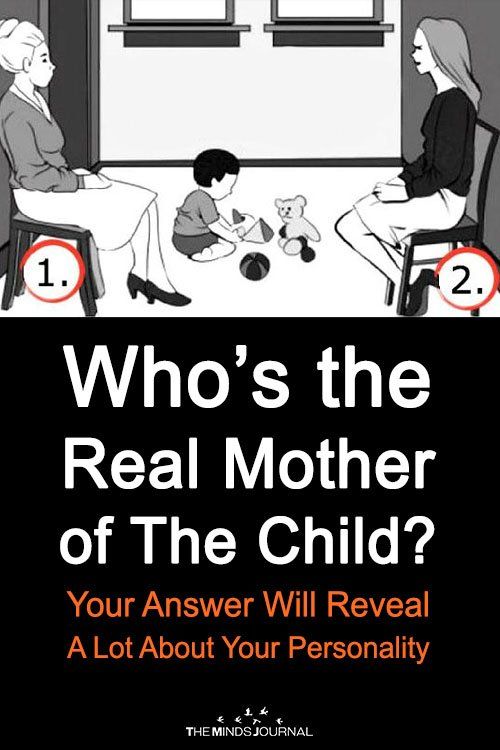
Have you ever wondered how your brain processes visual information? We are constantly bombarded with stimuli, and our minds are expert pattern-matching machines. Sometimes, how we interpret a simple scene, like the one depicted in image_81f720.jpg, can act as a mirror, reflecting our values, experiences, and even our underlying personality traits.
The Science Behind Visual Perception
Psychologists have long utilized projective tests to help individuals explore their subconscious. While not diagnostic tools, these visual scenarios—often called “personality puzzles”—rely on our ability to project our own internal frameworks onto an ambiguous situation. When you look at an image like image_81f720.jpg, you are not just seeing lines and shapes; you are engaging in an active process of meaning-making.
Your brain draws upon past memories, social conditioning, and even personal fears to “solve” the scene. This is why two different people can look at the exact same image and reach entirely different conclusions.
Why We Love Personality Puzzles
There is a fundamental human desire to understand ourselves better. In our fast-paced world, personality puzzles offer a low-stakes, high-engagement way to pause and reflect. They provide a moment of mental gymnastics that satisfies our natural curiosity. Whether it is a Rorschach-style inkblot or a logic puzzle like the one featuring the two women in image_81f720.jpg, these activities invite us to consider our perspectives through a different lens.
- Tip: When approaching these types of visual challenges, try to look at the scene without bias for a few seconds before settling on an answer.
- Insight: Often, our first instinct is driven by our most dominant personality trait, whether that be analytical, empathetic, or intuitive.
If you find yourself intrigued by the mysteries of the mind, you might want to explore how cognitive biases affect your daily financial decisions or learn more about the science of habit formation.