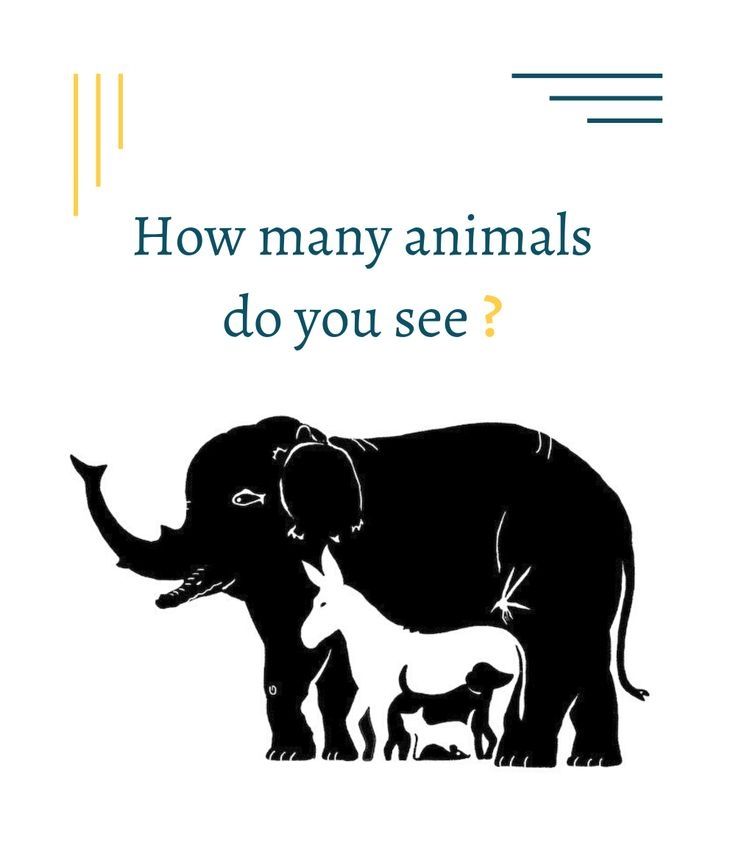
Optical illusions that challenge our perception and observation skills are a staple of internet viral culture. A particularly famous example is the layered animal silhouette puzzle shown in the image 5568d1ad91a1da66930b0bf1904797f1.jpg.
At a casual glance, you might only spot three or four large creatures standing together. However, tucked away into the negative spaces, the details of the linework, and the extremities of the larger figures are several hidden critters.
Let’s dive into the complete, structured solution to find out exactly how many animals are hidden inside this image.
The Definitive Answer
While answers online occasionally vary depending on how strictly you define a “hidden animal shape,” the universally accepted total for this specific variation of the puzzle is 9 animals.
The Detailed Breakdown: From Largest to Smallest
To find every hidden creature in 5568d1ad91a1da66930b0bf1904797f1.jpg, it helps to work systematically from the largest silhouette down to the smallest micro-details.
- 1. The Elephant
The primary black silhouette that forms the entire foundation of the puzzle. Everything else is contained within or attached to it. - 2. The Donkey
The large white silhouette layered directly inside the center of the elephant’s body. - 3. The Dog
The black silhouette nested comfortably under the belly/torso area of the white donkey. - 4. The Cat
The smaller white silhouette tucked directly beneath the dog’s chest and belly. - 5. The Mouse (or Rat)
The tiny black silhouette resting on the ground right beneath the cat.
The Hidden Details (The Tricky Ones)
If you only found those five, you missed the cleverest parts of the illusion! The remaining four animals are cleverly integrated into the facial features and extremities of the larger beasts:
- 6. The Dolphin / Fish (The Trunk)
Look closely at the tip of the elephant’s trunk. The very end is shaped like the tail and body of a dolphin leaping upward (or a curved fish). - 7. The Fish (The Eye)
Examine the elephant’s eye closely. Instead of a standard eye, the artist has drawn a distinct, tiny fish swimming horizontally. - 8. The Turtle (The Ear)
The flap of the elephant’s ear isn’t just an ear—its overall rounded shape and texture mimic the shell and body of a sea turtle swimming downward. - 9. The Mosquito (The Hind Leg)
Look closely at the space right above the elephant’s back left leg. There is a tiny, white insect silhouette resembling a mosquito or a gnat etched into the black background.
Why This Puzzle Tricks Our Brains
This puzzle relies heavily on a psychological concept known as Gestalt perception—our brain’s tendency to organize visual elements into a unified whole rather than a collection of separate parts.
When you first look at 5568d1ad91a1da66930b0bf1904797f1.jpg, your brain immediately identifies the massive black mass as an “elephant” and stops looking for alternative meanings in its features. It takes deliberate, focused attention to separate the elephant’s eye from the fish shape, or the trunk from the dolphin shape, overriding our brain’s shortcut to perceive the image as a single cohesive animal.